
The Faces of Venice
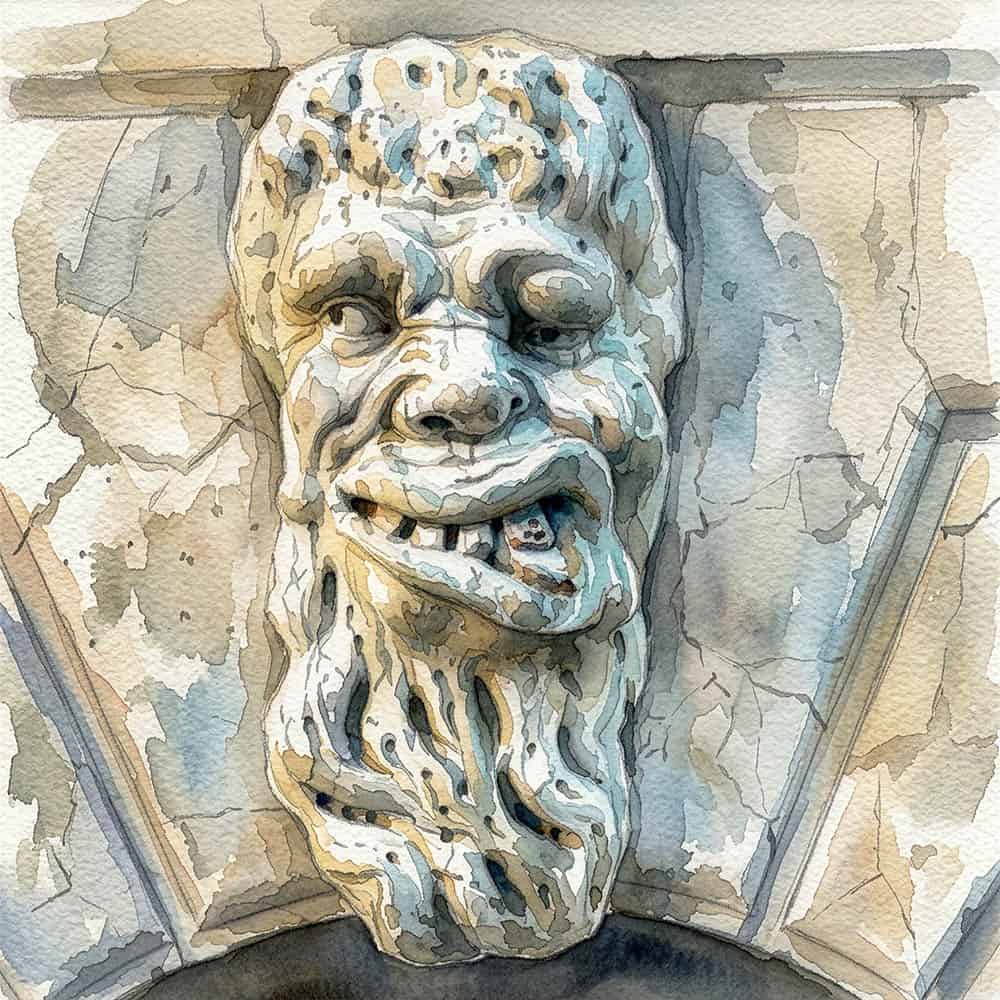
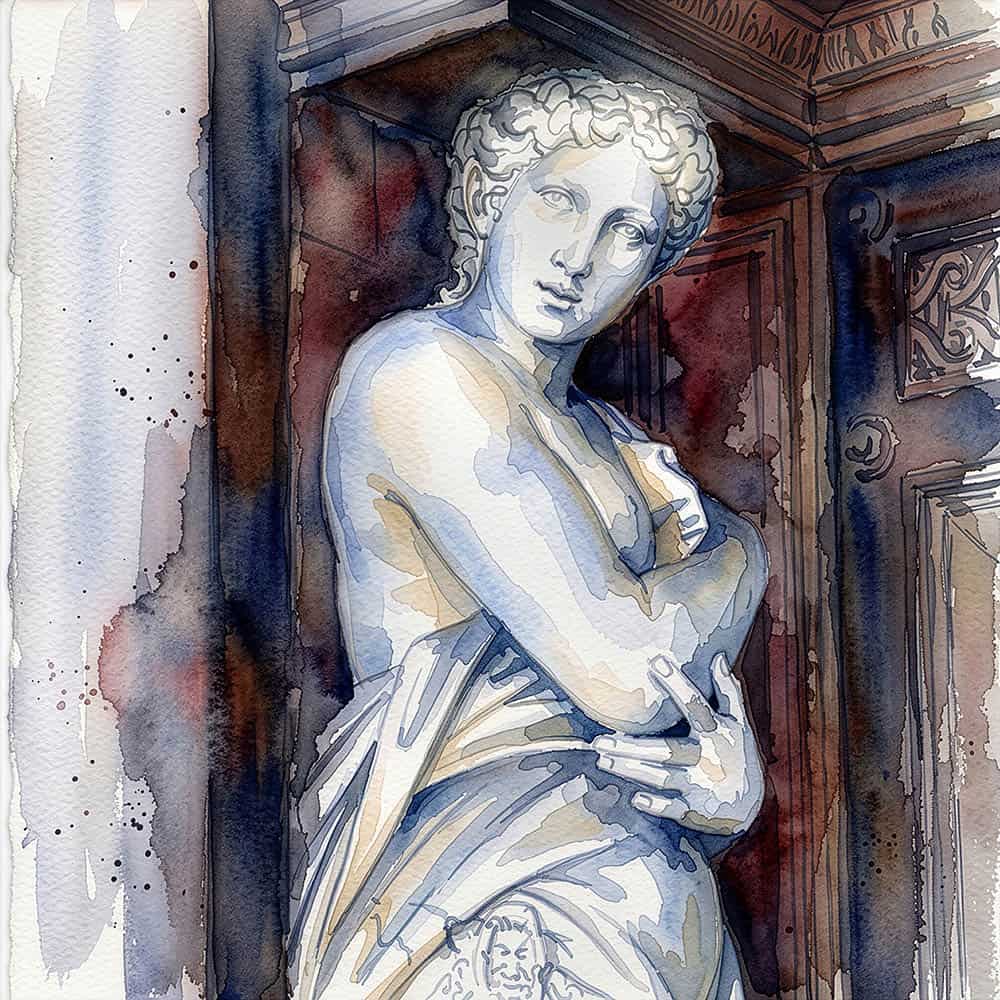
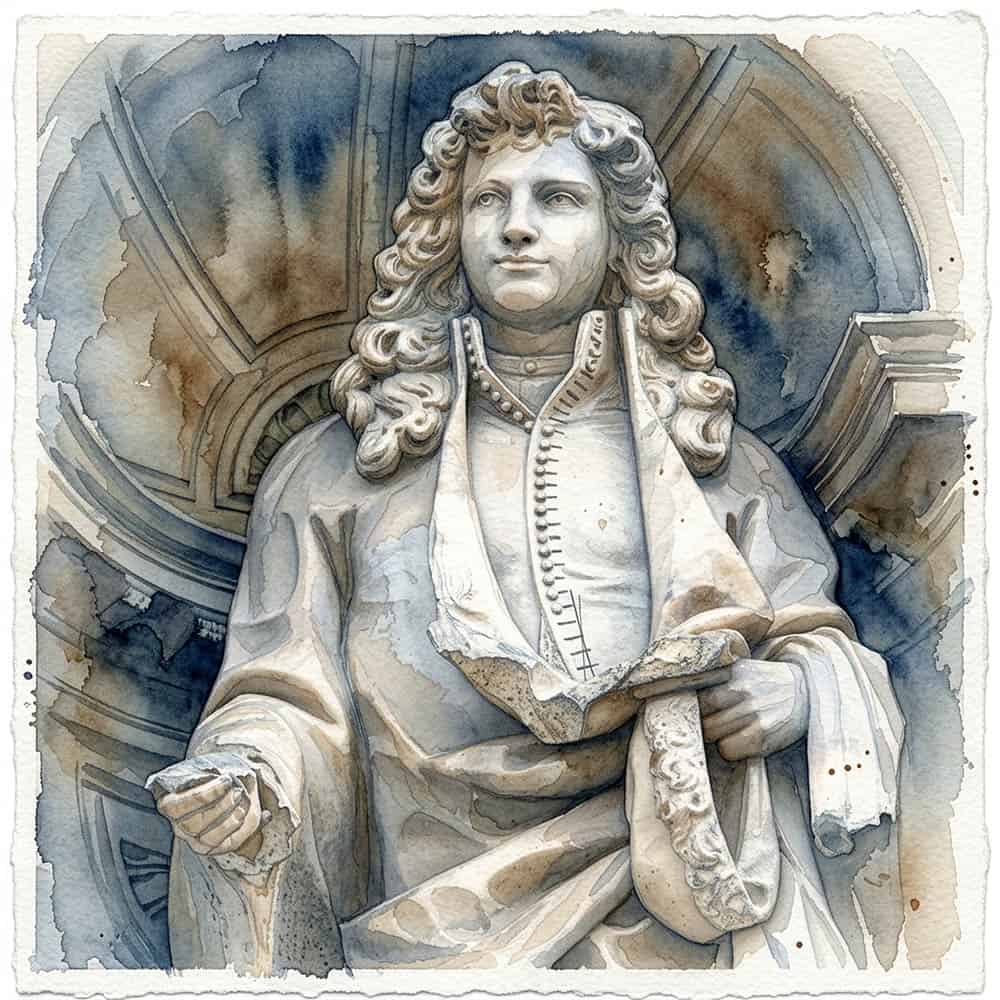
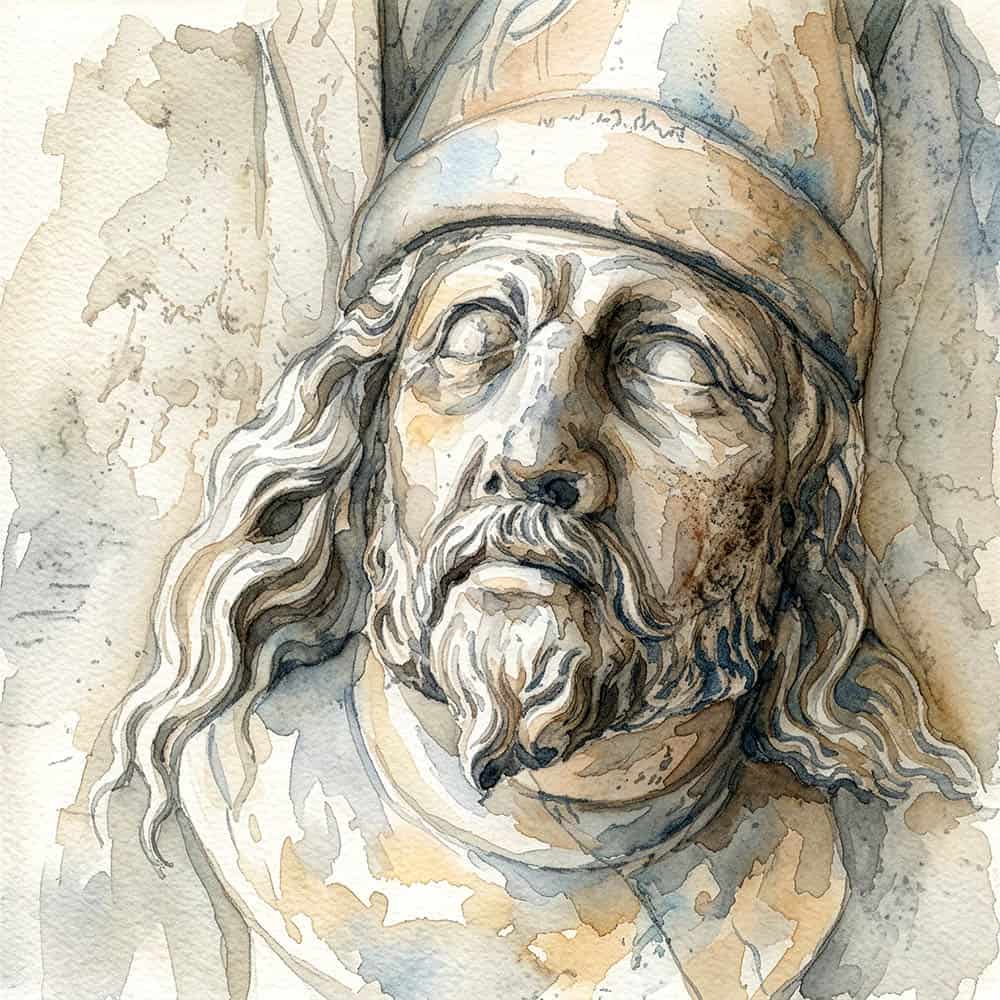
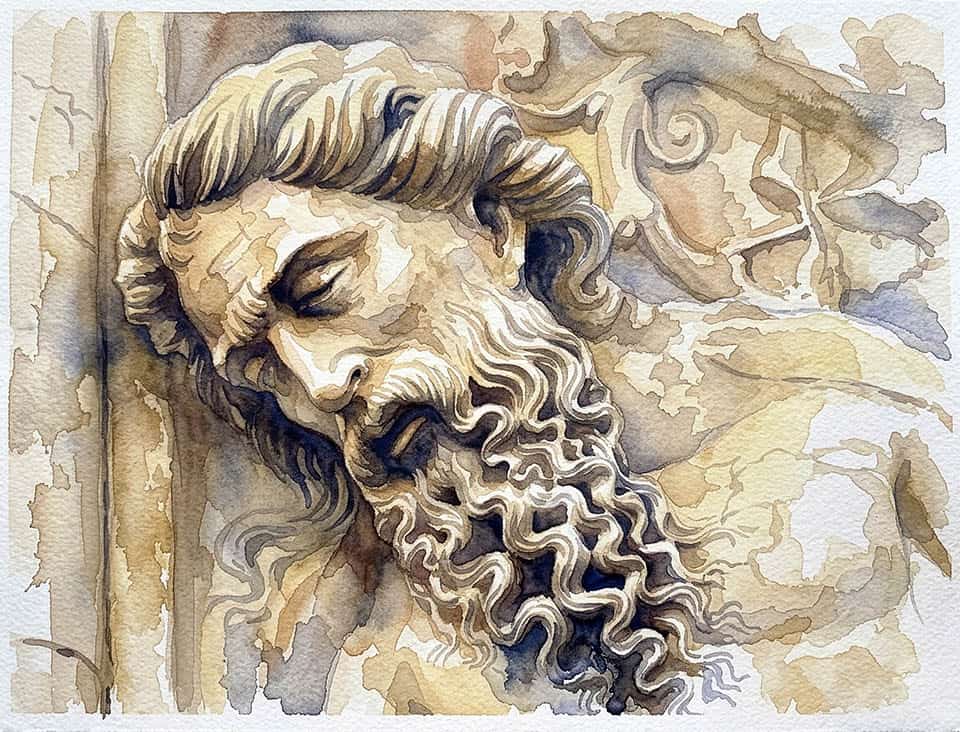
The Faces of Venice. Turning photographs into AI-generated watercolour art, brings out the beauty and mystery of these stone figures, silent witnesses to centuries of Venetian life.
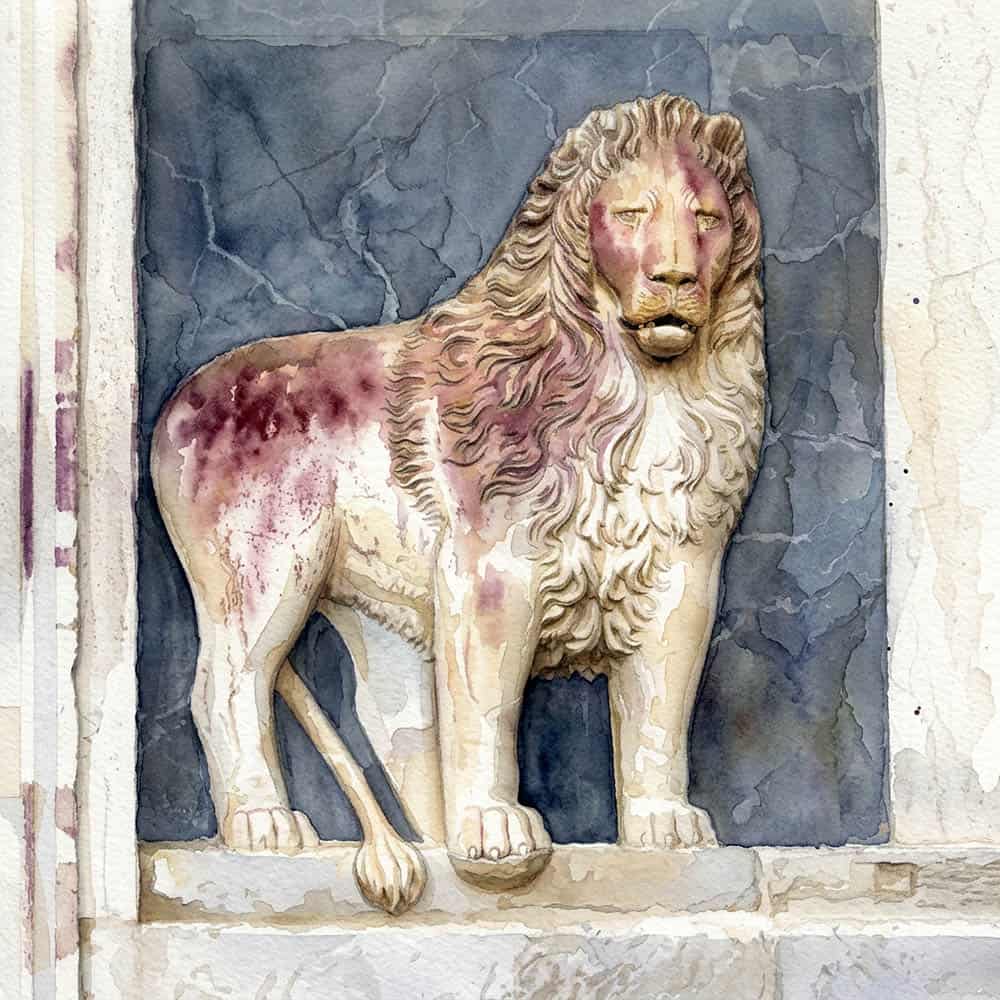
From religious devotional figures and lions, to grotesques and enigmatic faces, Venice’s stone carvings have served many roles – expressions of Christian faith, symbols of civic pride, and guardians of the Serenissima.
Since first visiting Venice in the mid-1970s, I’ve built up a significant collection of traditional photography and so, after 50 years, it was time to “bite the AI bullet”!
My goal was simple and threefold – to explore whether this recently introduced Firefly software in Photoshop, could create watercolour-style artwork, worth the effort and further investigation! To investigate whether this generative software could be produce results with enough consistancy, that a body of work could appear to be from “the hand of the same artist”. Finally, can these hybrid watercolour-style images, further add to the charm and beauty of the original photographs?
Judge for yourself. My own feeling is that these AI-watercolour derivates have given a remarkable “sense of life” and “Immediacy”, to these centuries-old stone faces of Venice.
- Faces in Stone – Venice’s Silent Guardians.
- Technical Notes
- AI Generated Watercolour Images – “The Faces of Venice”
- Links (internal–external)
Faces in Stone – Venice’s Silent Guardians
Spend enough time wandering through Venice and you start to see them everywhere. Faces in stone emerge from weathered walls, gaze down from columns and palace façades, peer from ancient wellheads and hide in shaded corners of forgotten courtyards. Many are symbols of Christian devotion, some are lions, a few are grotesques. They may also represent important figures in the city’s history, or just ordinary people, whose names have long been lost to history. Together, they form a silent population woven into the city’s fabric.
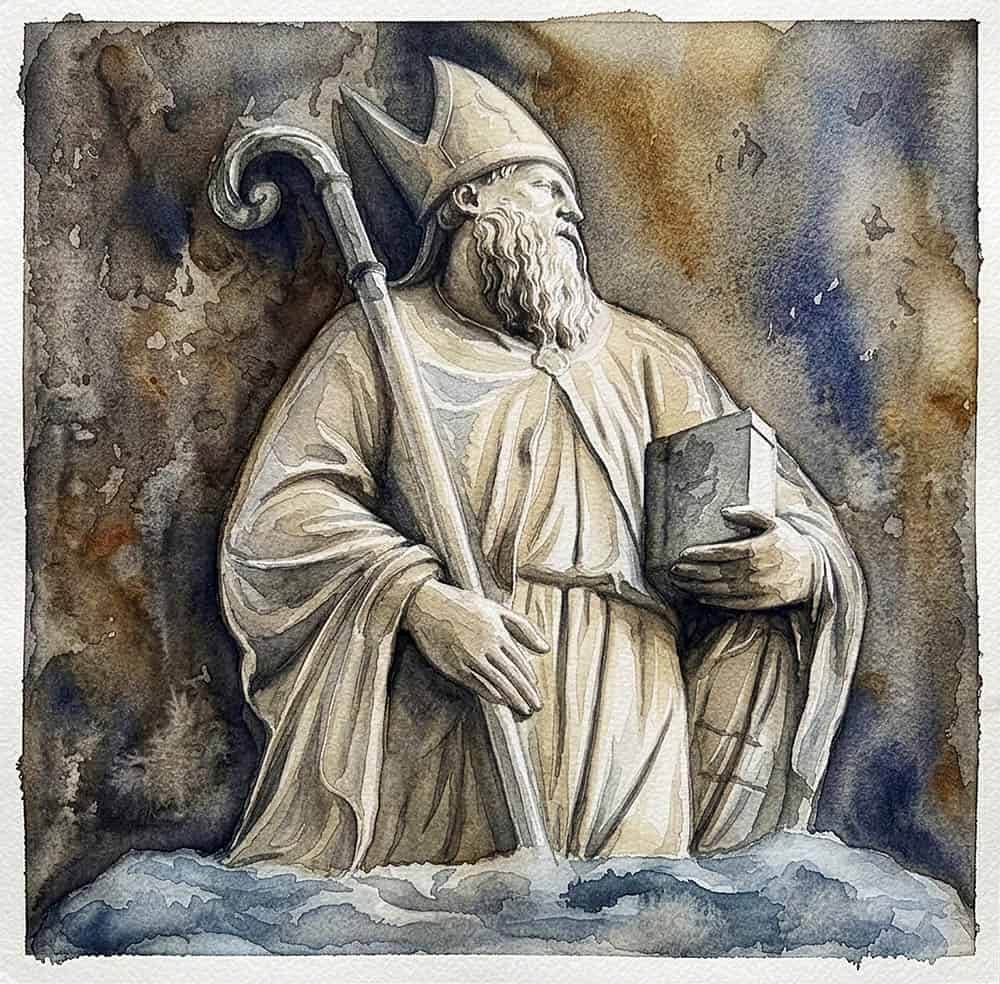
These carved faces served many purposes. In a deeply religious society, images of Christ, the Virgin Mary and the saints were expressions of Christian devotion. They offered protection to homes and neighbourhoods, creating a sacred presence in the streets and reminding passers-by of the divine, amid the bustle of daily life. Many were intended to inspire prayer or reflection, transforming even the humblest corner of the city into a place touched by faith.
Yet Venice was also a city shaped by older beliefs and popular superstitions. Grotesque masks, fierce lions and strange human faces were often thought to ward off evil influences and misfortune. Like stone guardians, they watched over doorways, bridges and public spaces. Their stern expressions conveyed a symbolic power, protecting inhabitants from dangers both real and imagined.
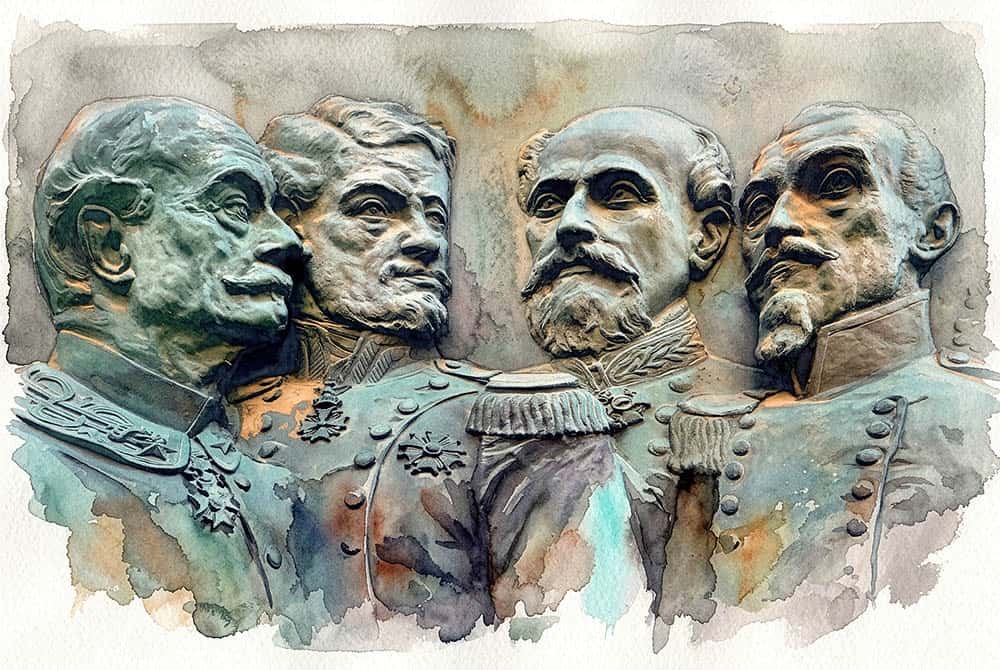
Other faces celebrated memory and prestige. Wealthy Venetian families adorned their palaces with sculpted portraits, heraldic figures and decorative heads that proclaimed their status. Public monuments honoured doges, military leaders and benefactors whose achievements shaped the history of the Republic. In this way, stone became a form of remembrance, preserving reputation long after human lives had passed into history.
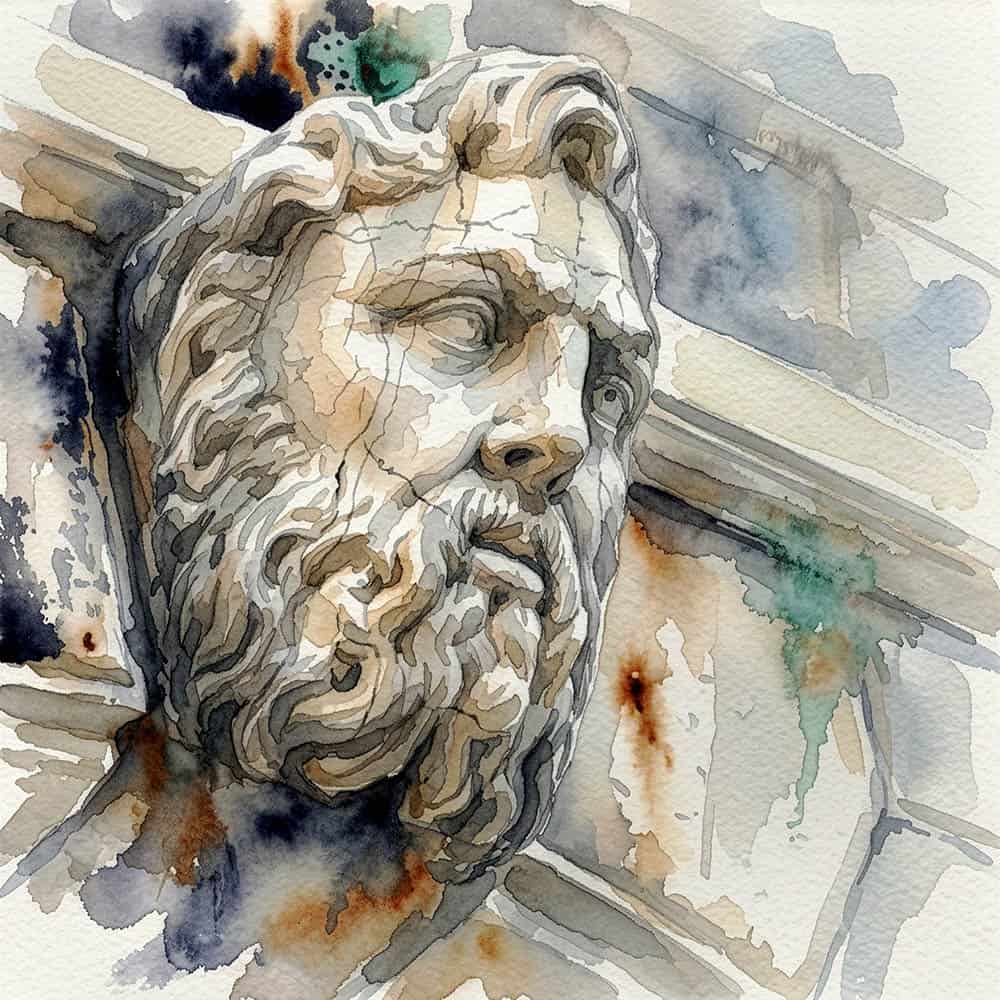
Perhaps most intriguing are the anonymous faces. Time has erased their identities, leaving only expressions carved by forgotten artisans centuries ago. They may have represented merchants, patrons, allegorical figures or purely decorative motifs. Today they feel almost human in their anonymity, reminding us that Venice was built not only by famous doges and noble families, but by generations of ordinary people whose stories survive only in fragments.
This is the quiet romance of Venice. The city is often celebrated for its canals and palaces, yet some of its most touching treasures are these faces in stone. They reveal a Venice where faith, superstition, memory and art were inseparable. Looking into their worn features, softened by centuries of sea air and sunlight, we encounter not merely decoration but a conversation across time.
These “Faces in Stone” are the city’s silent witnesses, still watching as the tides rise and fall, and as new generations of travellers pause to meet their gaze.
The Faces of Venice The Faces of Venice The Faces of Venice
Technical Notes
My goal was simple – to see if this new AI software could produce painterly, watercolor-style artwork of these wonderful stoneworks, that was worth the effort and further exploration. Firefly is a complex program, with “Generative Fill” being just one of many advanced tools, so it’s best to keep things simple and consistent, especially while learning. It runs on a subscription model, and credits can disappear quickly! I also wanted to inspire others to give it a try for themselves.
For this post only Firefly’s “Generative Fill” tool was again used. Photographs, selected from my online website galleries, were made at 1000 pixels on their longest side. All images were 2x upsampled which is a simple “zero-credits” command, in the generative fill page. This appears to produces a sharper and a surprisingly improved image quality. It would also allow a reasonable quality A4 sized jpg print, at the optimal 260 dpi resolution to be made. Textured matt digital fine art papers, are especially suitable here, mimicking the watercolour paper artists use.
Below is a part screenshot of the Firefly software interface with a photo loaded. I used the Gemini 3.1 (Nano Banana 2) setting, throughout my experimentation. At the bottom right of the screenshot, this uses 20 credits (other settings use less or more credits and you will get different effects). Next you check that the software has correctly set the format to match the photograph. Following this, set the Resolution box, between 1to 4K.
Note w.r.t. the resolution box setting. The setting does not magically improve an image that is already low resolution. It mainly affects the resolution and detail of the new pixels Firefly creates. If you’re filling a small selection, a 4K generation may provide little visible benefit over 1K. As a rule of thumb: Social media, web, concept art: 1K – General Photoshop work: 2K – Print, professional retouching, large canvases: 4K. I set it at 1K.
I paired it with very simple command prompts – in this case simply “turn into a watercolour painting”. You can then press the “Generate” button and wait for the result – roughly 20 seconds in my case.
Aside from 2x upsampling in Firefly (credit free), the only other processing in Photoshop involved minor adjustments to image density and contrast, aiming to create a consistent look, and give the impression that the set of images presented below, came from the same artist’s hand. My goal was to keep things simple, both for my own learning curve and to inspire others to give it a try themselves.
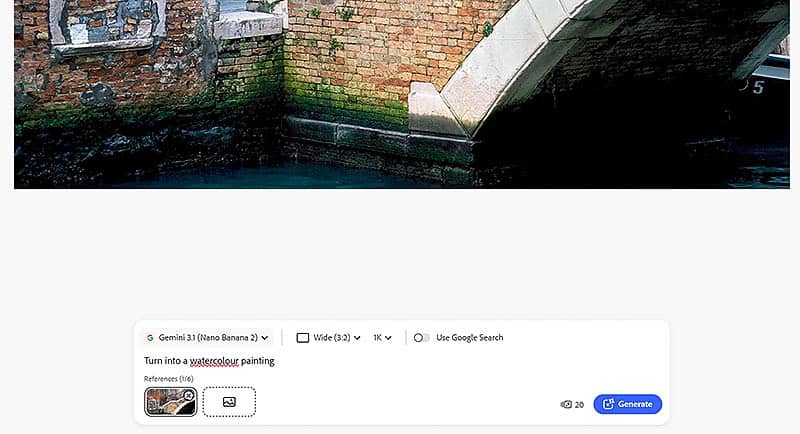
Note. If you’re not a Photoshop user, a range of alternative “free use” sites is given In the “Links Section” below. AI-Generated photography is becoming commonplace – this post offers a link below to my first foray into AI, that also covers: 1. Details about Firefly AI software and a summary of its main features. 2. The ethical concerns and frameworks surrounding the use of AI in photography. As AI continues to advance, these frameworks will likely focus even more on transparency, disclosure, provenance, verification, and accountability to maintain trust in what we see and believe.
The Faces of Venice The Faces of Venice The Faces of Venice
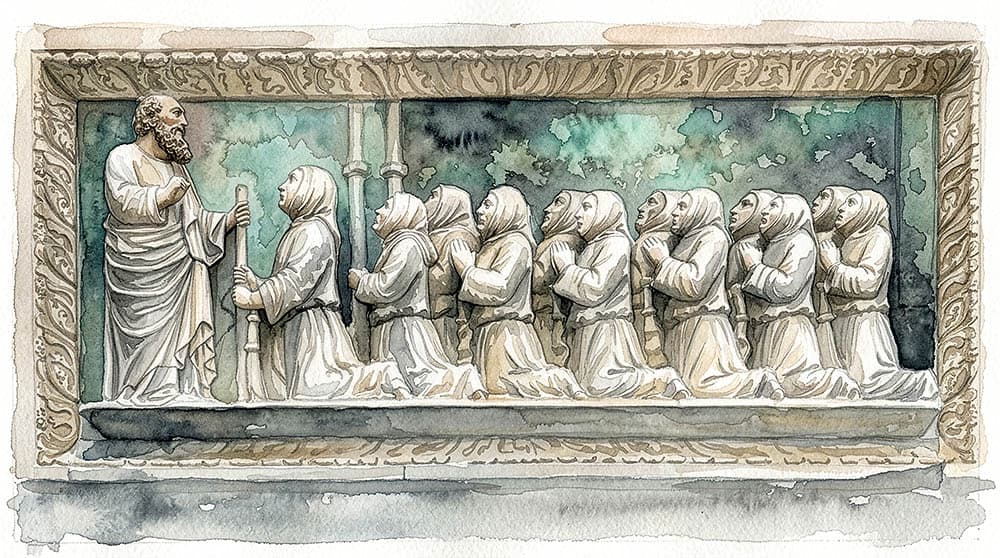
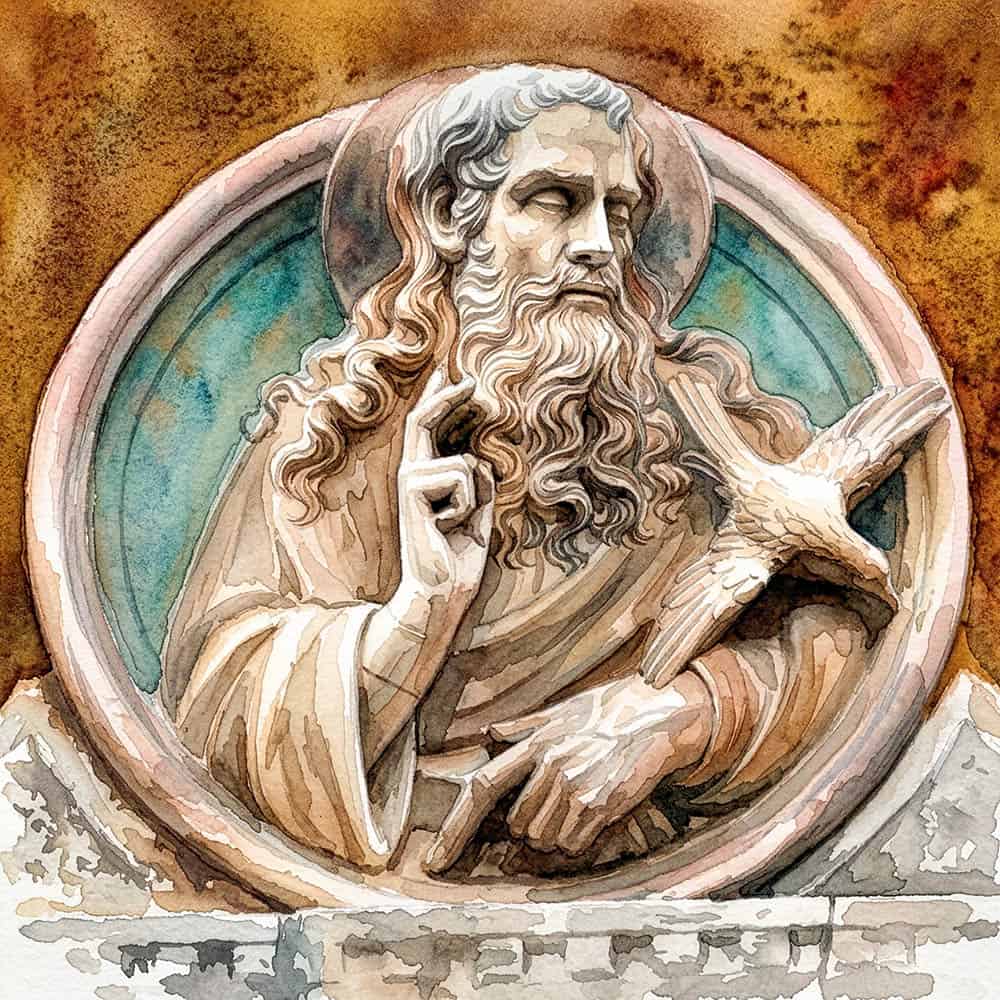
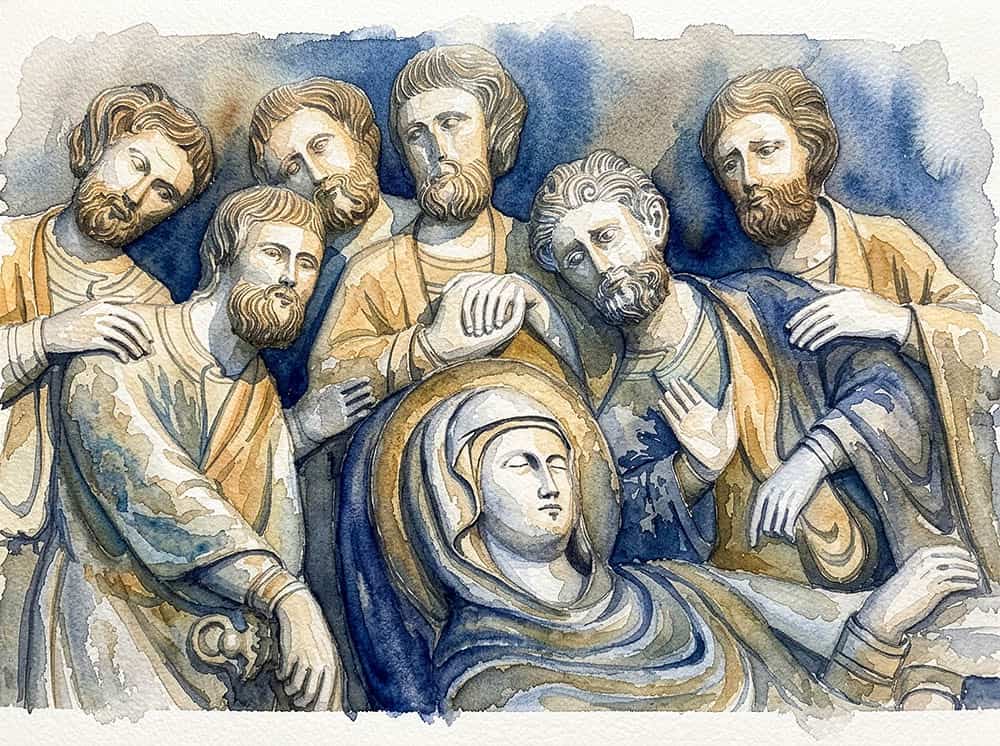
AI Generated Watercolours – “The Faces of Venice”
In order to present a fair number of large images for appraisal, whilst avoiding too much scrolling down, I decided not to include “before and after images” or descriptive text. All of the original photographs are in my website galleries. In the links section below you can find my first delve into AI artwork, showing the original photographs with the generated derivatives.
Links (internal–external)
AI-Generated photography is becoming commonplace – my “Depicting Venice. Turning Photographs into Paintings” post linked below, offers a link to my first foray into AI, that also covers: 1. Details about Firefly AI software and a summary of its main features. 2. The ethical concerns and frameworks surrounding the use of AI in photography. As AI continues to advance, these frameworks will likely focus even more on transparency, disclosure, provenance, verification, and accountability to maintain trust in what we see and believe.
My Photography to AI-Generated Artworks Posts:
- Depicting Venice. Turning Photographs into Paintings
- Depicting Cannaregio in Watercolour
- The Backstreets of Venice
Here are my other photography-based blog posts:
- The Sottoporteghi of Venice
- Photographing Venice-Towards Minimalism-Part 1
- Photographing Venice-Towards Minimalism-Part 2
- Photographing Venice
- Venice – Developing a personal vision
- Depicting Venice – Ian Coulling
- Depicting Venice 2 – Ian Coulling
- Depicting Venice 3 – Ian Coulling
- Characters in Stone
- Photographing Venice – Transforming decaying walls into art
- Photographing Venice – Old Doors and Service Boxes
- Why I love Venice
A quick search revealed these alternative, free of charge software websites, that you might like to investigate, to transform your photos into stunning paintings.
- Photo to Painting: Turn Picture into Painting Online Free | Fotor
- Turn Any Picture Into a Painting Online For Free | Picsart
- Photo to Painting – Instantly Turn Your Photo Into a Painting BeFunky
- FotoSketcher – the 100% free program to turn photos into paintingshttps://fotosketcher.com/
- Photo to Painting AI: Turn Photos Into Paintings Free Online – NightCafe