
Thomas Oboe Lee and Venice
Thomas Oboe Lee and Venice. This renowned Chinese American composer’s recent works capture the spirit of this enchanting aquatic city.
His life traces a remarkable arc across continents, musical traditions, and stylistic evolutions; reflecting a life shaped by migration, cultural hybridity, and a deep commitment to musical craft.
Born in Beijing on 5 September 1945, he became one of the most prolific and decorated voices in contemporary American composition, with a catalogue now exceeding 270 works, including 10 symphonies, 15 concerti, 23 string quartets, and the acclaimed chamber opera “The Inman Diaries”. Lee writes music that is melodically generous, rhythmically alive, and harmonically adventurous, with a strong narrative impulse.
In 1986, having been awarded the Rome Prize Fellowship, he moved to Italy, residing at the American Academy in Rome, from September 1986 to July 1987. He became a total “Italophile”, actively writing works about the city including: “Symphony No. 7 … Roman Holidays” (2008) and “Sestetto d’Archi … Souvenir di Roma” (2025).
In 2012, following the Academy’s reduction in funding to two weeks, Lee made his first trip to Venice, spending two weeks from mid-December onwards, before moving on to Rome in January. Since then, he goes for extended stays every winter to Rome and Venice in June, avoiding the summer heat and humidity.
Remarkably, Lee at 80, still continues his professorial teaching post at Boston College and his eclectic musical and video output! His love for this wonderful aquatic city, shines through in his Venetian creations.
This post, illustrated with some of his own Venetian images covers:
- Biography: Early Life – Education – Career and Professional Life
- Music, Awards and Recordings
- What defines his musical style
- The Beginning of an Italian love affair
- Venetian Music including Video Works
- Quotations
- Links (internal–external)
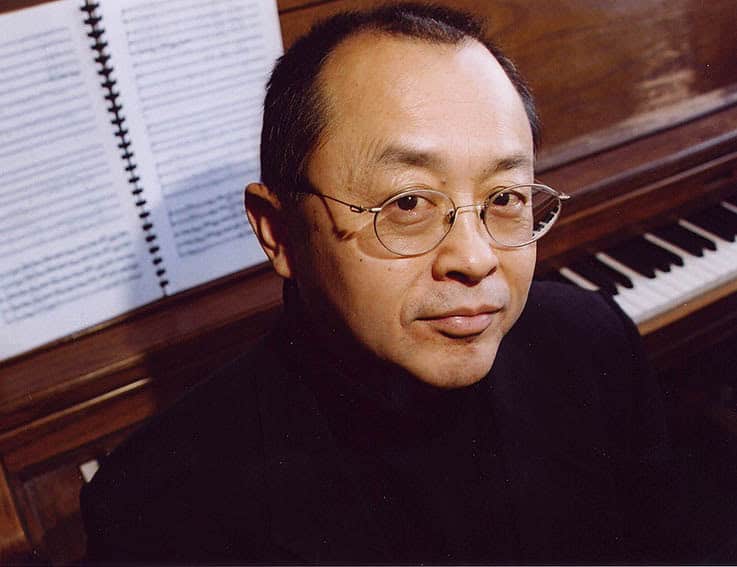
Thomas Oboe Lee. (b. 5 September 1945)
“I am a composer of classical music with a bit of jazz in it. Gunther Schuller coined the term “third-stream” music. That is what I do. Performance-wise, I am a jazz flutist“
Biography – Thomas Oboe Lee and Venice
Early Life. Lee was born on September 5th, 1945 in Beijing, China. Born during the final stages of the Chinese Civil War, his family faced the escalating instability as Communist forces under Mao Zedong gained control, culminating in the establishment of the People’s Republic of China in October 1949. In responce to the Communist takeover, his father, mother and sister, Mary Viola Lee; escaped to British Hong Kong.
After living there between 1949 to 1959 and following his parents divorce, Thomas and Mary followed his father and emigrated to São Paulo, Brazil. Living there until 1966, Thomas and his sister decided to join their mother and a second sister Teresa Mandola Lee in the USA.
As a teenager in São Paulo during the early 1960s, Lee’s musical roots grew alongside the rise of bossa nova. Immersed in its smooth rhythms and rich harmonies through local shows and recordings, he drew inspiration from trailblazers like João Gilberto and Antonio Carlos Jobim, who fused samba with jazz. Around this time, he also discovered American jazz greats such as Bill Evans, Jim Hall, Paul Desmond, Gerry Mulligan, Miles Davis, and John Coltrane, sparking his early love for improvisation.
Starting with the clarinet, Thomas later switched to the flute and baritone saxophone. Both of his parents were professional singers, mostly performing in night clubs; so music was always playing from the stereophonic record player at home. In Brazil, he began performing professionally, joining an eight-piece dance band that played at parties every weekend. Along the way, he met and performed with some highly talented musicians, including one who became especially famous: Chico Buarque. Lee developed the early signs of the stylistic breadth that would later define his work.
Education. In the USA, he lived in Pittsburgh, Pennsylvania, starting at the university as a chemistry major before switching and graduating with a BA in Music in 1972. During these six years in Pittsburgh, Lee constantly gigged – at parties, dances, and jazz clubs.
 In 1972, Thomas moved to Boston to pursue a Master’s degree in jazz composition at the New England Conservatory of Music, where he studied with George Russell, Jaki Byard, Thad Jones, and others. In the spring of 1973, Lee took a course taught by the renowned composer and conductor Gunther Schuller, called “Advanced Compositional Techniques for the Jazz Composer.” In that class, Gunther introduced them to the music of Elliott Carter, Karlheinz Stockhausen, Charles Ives, and more. For Thomas it was life-changing and for the final project, they were tasked with writing a string quartet. He did, and it became his Opus 1: *Aperture*.
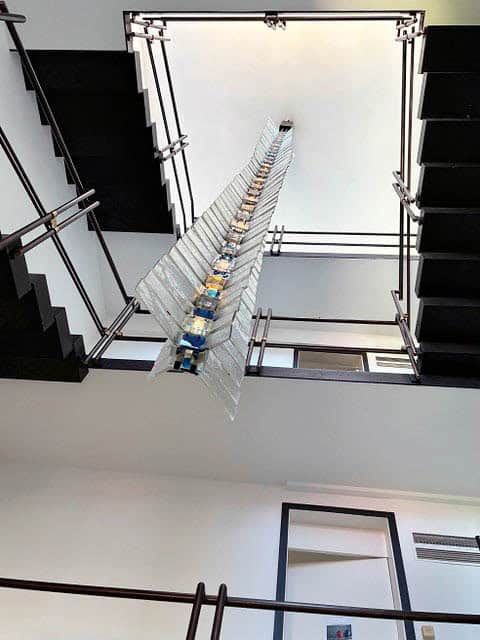
Photo:Thomas Oboe Lee
The following year Thomas switched from “jazz” composition to “classical” composition; studying under William Thomas McKinley – a great composer and a terrific jazz pianist. They developed a strong bond, going on to form a quintet, that performed in jazz clubs around Boston – with Lee focussed principally on the flute.
In 1976, Thomas got a fellowship in composition at Tanglewood, the summer retreat of the Boston Symphony Orchestra in western Massachusetts. He studied with the American French composer, Betsy Jolas. At Tanglewood, he also met Joan (Dutcher) Jeanrenaud, part of the renowned the Kronos Quartet in the early 80’s and she invited him to write a work for the group. The result was possiblly his most famous work, “Morango … almost a tango” (1983). That was also a turning point in his musical output, incorporating more tonal and jazz elements into his work.
In 1977, Lee went to Harvard as a doctoral (PhD) student, finishing in 1981. In 1981, he co-founded the Boston based new music collective “Composers in Red Sneakers”, which became a vital platform for contemporary music in the Boston-Cambridge area. The group released a collaborative LP in 1984. Lee left the collective in 1986, after receiving the Rome Prize Fellowship, which took him to Italy for a year of intensive work.
Career and Professional Life. During these years at NEC and Harvard, Lee taught music theory and jazz flute at the Berklee College of Music. He also taught elsewhere; at NEC, MIT, Swarthmore College and Duke University. In 1990, Lee gained a part-time professorial post at Boston College, which eventually turned into a full-time, tenured position. Thomas is still there at 80, teaching full-time!
Music, Awards and Recordings – Thomas Oboe Lee and Venice
To date, Thomas Oboe Lee has composed more than 282 works: ten symphonies, fifteen concertos for various solo instruments, 23 string quartets, a 100-minute two-act chamber opera “The Inman Diaries,” eighty-plus choral works and song cycles, and tons (his word) of solo and chamber works.
His music has received many awards, among them the Rome Prize Fellowship, two Guggenheim Fellowships, two National Endowment for the Arts Composers Fellowships, two Massachusetts Artists Fellowships, and First Prize at the Kennedy Center Friedheim Awards for his String Quartet No. 3 … “child of Uranus, father of Zeus.”
 Lee has received commissions from many organizations including Amnesty International USA, the Fromm Music Foundation, the Koussevitzky Music Foundation, the Kronos Quartet, the Manhattan String Quartet, the Lydian String Quartet, the Hawthorne String Quartet, the Formosa Quartet, the Artaria Quartet, Apple Hill Chamber Players, the American Jazz Philharmonic, Boston Modern Orchestra Project, the Boston Landmarks Orchestra, the Civic Symphony Orchestra of Boston, the Pro Arte Chamber Orchestra of Boston, the Boston Classical Orchestra, the New Jersey Symphony Orchestra, the Omaha Symphony Orchestra, and the Saint Paul Chamber Orchestra.
Ten of his early works originally published by Margun Music Inc., are now available at G. Schirmer Inc./Associated Music Publishers. The rest is self-published under the moniker, Departed Feathers Music – a BMI affiliate.
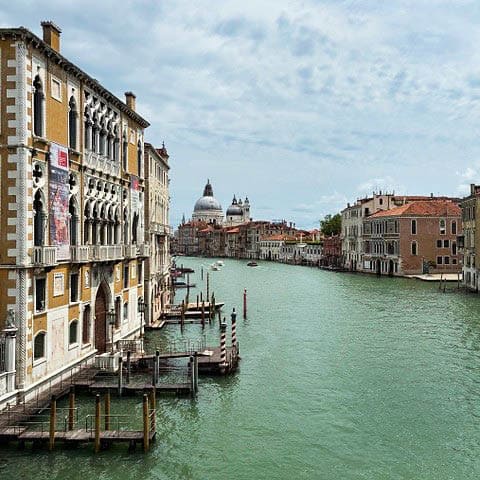
Photo: Thomas Oboe Lee
Compact disk recordings of his music are available on Nonesuch, Koch International Classics, Arsis Audio, MCA Classics, BMOP Sound and GM Recordings.
Studio recordings of his music are available for digital download @ bandcamp, iTunes, Amazon Music, SoundCloud, Spotify, Tidal, Apple Music, YouTube Music, Deezer, etc.
For complete information regarding the incredible range of his musical and video output, visit his website at this link: Thomas Oboe Lee
Statement – About – Video and Audio Links – Music – Contact – Music and Dance
Thomas has made over 1000 videos, accompanied by his own music compositions in the background! Many can be seen in the linked sites below, including those relating to Venice:
What defines his musical style?
Lee’s musical style is a hybrid language of lyricism, modernist clarity, jazz inflection, and cosmopolitan rhythm, shaped by his unusual life trajectory across China, Hong Kong, Brazil, and the United States. What makes his voice distinctive is not simply eclecticism, but the precision with which he fuses these influences; into a coherent, elegant, and often emotionally direct idiom.
 It is melodically generous, rhythmically alive, and harmonically adventurous, with a strong narrative impulse. Regarding the latter, Lee’s music often feels narrative, even when abstract. His multicultural background gives him a sense of musical storytelling – each piece unfolds like a journey through shifting emotional landscapes. This narrative quality is why his works resonate strongly with performers and audiences: they feel lived, not merely constructed.
Lyricism – Long, expressive lines with vocal qualities
Jazz Harmony – Extended chords, chromatic colour, rhythmic looseness
Latin Rhythms – Tango, samba, dance derived phrasing
Modernist Clarity – Transparent textures, structural rigor
Colouristic Orchestration – Precise timbral choices, vivid instrumental colours
Narrative Impulse – Emotional arcs, storytelling through structure
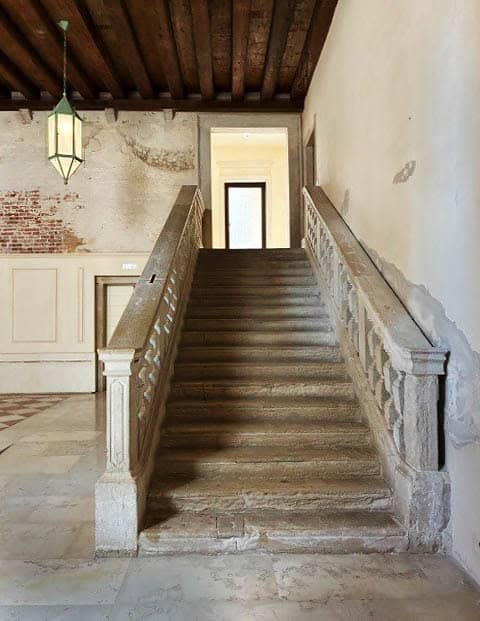
Photo: Thomas Oboe Lee
The beginning of an Italian love affair
In 1986, having been awarded the Rome Prize Fellowship, he moved to Italy, residing at the American Academy in Rome, from September 1986 to July 1987.
From that year in Rome he became a total “Italophile”, actively writing works including two works about the city. Links to Bandcamp recordings: “Symphony No. 7 … Roman Holidays” (2008) “Sestetto d’Archi … Souvenir di Roma” (2025).
Another important work was a string quartet that was inspired by the “stolpersteine” plaques found in the streets of Rome, Venice, all over Italy, and in Europe. Created by a German artist, Gunter Demnig, they commemorated the Jews who were arrested by the Nazis during WWII and sent to gas chambers in Auschwitz and Dachau. SQ14 … Qui Abitava (2020) | Thomas Oboe Lee
In 2012, following the Academy’s reduction in funding to two weeks, Lee made his first trip to Venice, spending two weeks from mid-December onwards, before moving on to Rome in January. Since then, he goes for extended stays every winter to Rome and Venice in June, avoiding the summer heat and humidity.
Venetian Music and Video Works – Thomas Oboe Lee and Venice
Thomas Oboe Lee’s Venetian themed music, forms one of the most personal and revealing threads in his catalogue. They are not a separate idiom – but a Venetian colouration of his core voice.
Venice is not just a subject for him – it is a creative homeland, a place of memory, architecture, sensuality, and spiritual atmosphere. His Venetian works arguably show him at his most lyrical, most colouristic, and emotionally transparent. His Venetian output is not a single cycle, but a constellation of pieces inspired by a strong sense of place, notable characters, paintings, and atmosphere. Lee is a walker. Many Venetian works come directly from daily walks, each movement a “postcard” from a route through the districts of Venice.
He has visited Venice many times since 2012, often staying for extended periods, sketching, walking, absorbing the city’s acoustics and light. Venice becomes a psychological landscape in his music: reflective, shimmering, nostalgic, and rhythmically fluid.
Venice is a city of Memory and Migration – Europe’s first truly multicultural city, where East met West. As someone who lived in China, Hong Kong, Brazil, and the U.S., Lee is drawn to cities with layered histories. Venice’s palimpsest of cultures mirrors his own life. The city also gives him a space to merge his multicultural sensibilities – Brazilian rhythm, French clarity, American modernism; with a deep emotional and architectural imagination.
What characterizes his Venetian Musical Identity?
- Light – Harmonic shimmer, impressionistic colour
- Water – Fluid rhythm, reflective and shimmering textures
- Architecture – Structural clarity, geometric phrasing
- Memory – Nostalgic lyricism, emotional depth
- Sacred Space – Modal harmony, choral spaciousness
- Theatrical Color – Sudden contrasts, playful gestures
La Serenissima (2013)
Work for two flutes, two oboes, two clarinets, two horns and two bassoons, in six movements;
1. Introduction and Allegro – 2. Largo – 3. Presto – 4. Allegretto – 5. Adagio – 6. Molto Allegro … TRIO.
Listening to the nine operas by the Venetian composer Antonio Vivaldi, Lee wrote: “As I was listening to these obscure operas by Vivaldi it dawned on me that I was very attracted to what I was hearing, and it was seeping into my musical thinking in the most natural way imaginable”…. “At the same time I began reading about Vivaldi and his life as a priest, violinist, teacher, impresario, and composer in the city of Venice and other cities nearby. What a fascinating life he led!!!”…. “I also discovered in my reading of his life that the city of Venice at that time, was called La Serenissima Repubblica di Venezia.“
Bandcamp Link. : La Serenissima (2014)
Piano Trio No. 4 … Le Gondole Lugubri (2022)
“I am a huge fan of Veronique Gens. On her album “Nuits” there is a cello and piano duo called “La Lugubre Gondola.” It is a beautiful work that Franz Liszt wrote on the occasion of Wagner’s death in 1883 in Venice. The original version was for piano solo. Liszt subsequently made versions for the cello and the violin.)….. “I thought the Franz Liszt work would be a fertile seed for a trio of violin, cello and piano. I would make each movement a musical portrait of an expatriate who had an indelible connection to the city of Venice.”
1. Richard Wagner, d. 1883
2. Franz Liszt, d. 1886
3. Henry James, d. 1916
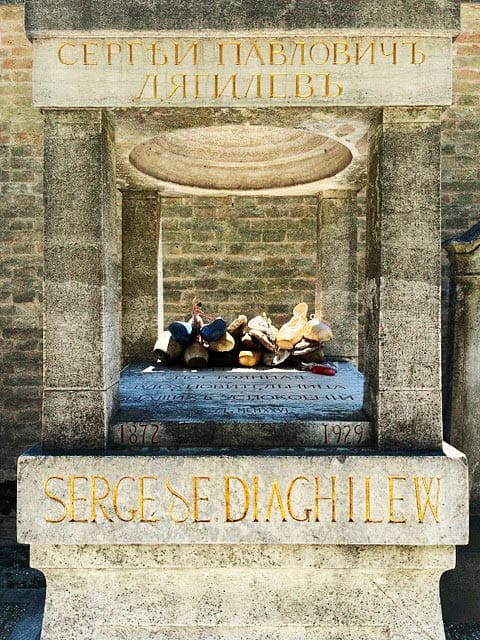
4. Serge Diaghilev, d. 1929
5. Thomas Mann, d. 1955
6. Igor Stravinsky, d. 1971
7. Ezra Pound, d. 1972
8. Peggy Guggenheim, d. 1979
Bandcamp Link: Piano Trio No. 4 … Le Gondole Lugubri (2022) | Thomas Oboe Lee
Symphony No. 10 … Death in Venice (2025).
“On a recent 2025 visit to Venice I decided on the flight over that one of my many projects that year will be my 10th symphony. Yes, I’m quite aware of the curse of the 9th!!! So instead of shying away I decided to confront that superstition or myth head on! The subject of the symphony will be “death” and it will be a musical tone poem based on the Thomas Mann novella, “Death in Venice.” The symphony will be in six movements“
1. Gustav Von Aschenbach … Andante moderato
2. The Gondolier … Allegro TRIO
3. Grand Hôtel des Bains … Allegretto TRIO
4. Lido … Moderato
5. Tadzio … Allegro TRIO
6. The Plague … Funereal
Bandcamp Link: Symphony No. 10 … Death in Venice (2025), by Thomas Oboe Lee
Photo: Thomas Oboe Lee
“Souvenir d’un lieu cher … Venise” (2026).
“Looking back into my portfolio, I discovered that I have so far written four works for cello and piano – so it is time to do another one.”…. “Everyone loves “Mélodie” as a standalone piece from Tchaikovsky’s “Souvenir d’un lieu cher” for violin and piano. Inspired, I decided I should do my own version of “Souvenir,” albeit in my case for cello and piano. …..The “place” mentioned in Tchaikovsky’s title is Brailov, the estate of his wealthy patron, Nadezhda von Meck. He and Miss Meck had a long relationship mostly via letters and his many retreats for composing at the Brailov estate…..This cello and piano work will be a set of movements celebrating a few of my favorite locations in Venice“:
1. Campo del Ghetto Nuovo
2. Chiesa della Madonna dell’Orto – Tintoretto
3. Museo di Palazzo Grimani
4. Basilica Gloriosa dei Frari – Canova, Titian and Monteverdi.
5. Gallerie dell’Accademia
6. Isola di San Michele – Stravinsky, Diaghilev, Pound and Nono
Bandcamp Link: Souvenir d’un lieu cher … Venise (2026) | Thomas Oboe Lee
Videos
Thomas has produced over a thousand videos with his musical accompaniment. Here are some mostly recent examples relating to Venice linked below, and available at https://www.youtube.com/user/thomasoboelee/videos:
Thomas Oboe Lee: Rio di Noale, Venice … No. 131
Thomas Oboe Lee: À la minute … Largo. No. 975
Thomas Oboe Lee: Grand Canal ’18 … No. 1000
Thomas Oboe Lee: Le Gondole Lugubri … No. 1024
Thomas Oboe Lee: Liz Wilson in Venice … No. 1071
Thomas Oboe Lee: Moments Musicaux … No. 1082
Thomas Oboe Lee: Peggy a Venezia … No. 1089
Thomas Oboe Lee: Rio de Santa Fosca … No. 1090
Quotations
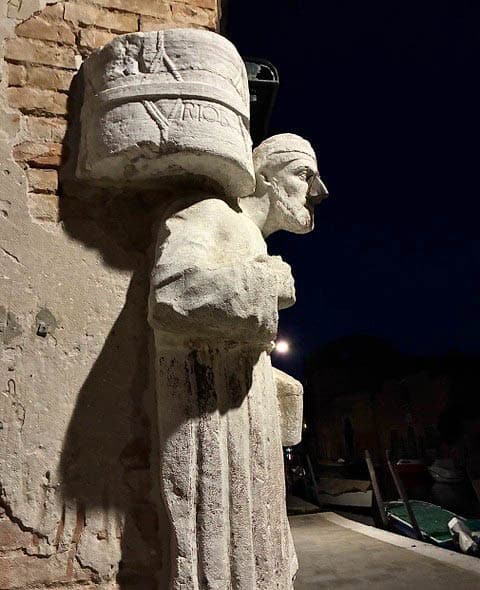
Quotes always reveal much about person making them – here are some taken from his website:
“I have decided recently that I am no longer interested in having my music performed live in the concert hall. Why? Murphy’s Law“.
“The last time I went to a concert of my music performed live was in 2018“.
“The moment I finish a piece of my music I take it and my favorite musicians into the recording studio. Thanks to digital technology, what I get is stunning and beautiful“.
Photo: Thomas Oboe Lee
Links (internal–external)
- Death in Venice by Thomas Mann
- The Venetian School of Music
- Venice Districts and Attractions – Introduction”
- Introduction to Venice
Thomas Oboe Lee and Venice Thomas Oboe Lee and Venice Thomas Oboe Lee and Venice Thomas Oboe Lee and Venice
Thomas Oboe Lee and Venice Thomas Oboe Lee and Venice Thomas Oboe Lee and Venice Thomas Oboe Lee and Venice