Located on the Campo Santi Giovanni e Paolo in Venice, it is probably the best-known scuola, as it is located next to the Ospedale and the church of Santi Giovanni e Paolo (San Zanipolo).

Scuola Grande di San Marco
read more

Located on the Campo Santi Giovanni e Paolo in Venice, it is probably the best-known scuola, as it is located next to the Ospedale and the church of Santi Giovanni e Paolo (San Zanipolo).

A lay confraternity in Venice, named after San Rocco, a patron saint revered for protection against plagues.

Dedicated to Saint Mary, it was founded in 1261 in Venice and formed one of the seven Scuole Grandi. The present site or Scuola Nuova is located just to the south, over the bridge from the Scuola Vecchia.
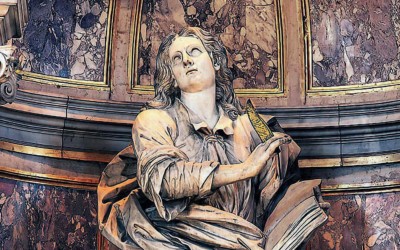
Founded in 1261 in Venice, it has its origins in the Church of Sant’Aponal (Sant’Appollinare) and then moved in 1301, to what was called “Contrada San Stin”, today in the district of San Polo.

Located in Dorsoduro, it was the last of the scuole in Venice. to be elevated to grand status in 1767.

These “Great Schools” (singular: Scuola Grande), were confraternity or sodality institutions and were founded as early as the 13th century, as charitable and religious organisations for the laity.

The Scuola Dalmata dedicated to St George, was established in 15th century Venice, by the Dalmatian Slavs, or “Schiavoni,” who lived in Venice.

When the Lombard’s invade Italy in 568, one of the first cities in their path is Aquileia – a Christian town of long-standing importance, traditionally held to have been founded by St Mark.

Representing Mark the Evangelist, in the form of a winged lion holding a Bible; it is the symbol of the city of Venice and formerly of the Venetian Republic.
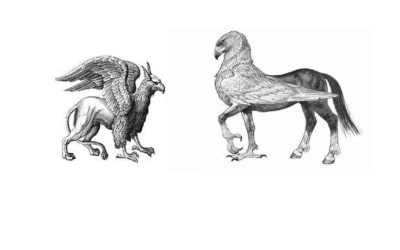
The Gryphon and Hippogryph, are two mythical animal-bird hybrid creatures, that in the history and culture of Venice have assumed great symbolic meaning to the State, Church and Alchemic Science.