They were the two rival factions, into which the working class of Venice was divided. Like modern gangs, they could be identified by their “colours”: the Nicolotti wore black caps and scarves; whilst the Castellani wore red.
The Language of Venice
It is unique, despite modern worldwide cultural influences, as it remains original and is used by all classes of society.
Prostitutes and Courtesans
A reality of life in Renaissance Italy, Venice was known throughout Europe and Russia, for its beautiful and exotic prostitutes.
Venice Carnival Events
Updated for 2026, this post covers one of the most famous carnivals in the world. Beautiful costumes and typical Venetian masks, transform the city in a magical way.
Antonio Vivaldi – Life and Legacy
Vivaldi was a Venetian baroque composer, virtuoso violinist, teacher and Catholic priest. Born Antonio Lucio Vivaldi in Venice on the 4th March 1678, he is recognised as one of the greatest baroque composers and his influence during his lifetime was widespread across Europe.
History of Venetian Masks
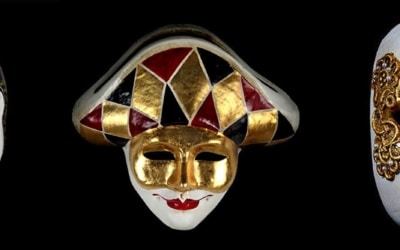
The Mask is an iconic object, because it projects the Venetian’s spirit towards celebration, amusement and transgression.
Venetian Wells – Drinking Water
As the population of Venice in the Rialto area developed, a supply of fresh drinkable water ensured survival.
History of Venetian Glass
“Vetro Veneziano”, has been made for over 1,500 years and since the 13th C, on the island of Murano. It has a long history of innovations in glass making being Europe’s first major glass making centre.
The Gondolas of Venice
A complete guide to this quintessentially Venetian boat. Traditionally a flat-bottomed and rudderless rowing craft; it is well suited to the shallow conditions of the lagoon and the city’s canal system.
The Golden Head Apothecary
“La Testa D’Oro”, was located almost opposite the Church of San Bartolomeo, close to the San Marco side of the Rialto Bridge.