These “Great Schools” (singular: Scuola Grande), were confraternity or sodality institutions and were founded as early as the 13th century, as charitable and religious organisations for the laity.

Scuole Grandi of Venice
read more

These “Great Schools” (singular: Scuola Grande), were confraternity or sodality institutions and were founded as early as the 13th century, as charitable and religious organisations for the laity.

The Scuola Dalmata dedicated to St George, was established in 15th century Venice, by the Dalmatian Slavs, or “Schiavoni,” who lived in Venice.

When the Lombard’s invade Italy in 568, one of the first cities in their path is Aquileia – a Christian town of long-standing importance, traditionally held to have been founded by St Mark.

Representing Mark the Evangelist, in the form of a winged lion holding a Bible; it is the symbol of the city of Venice and formerly of the Venetian Republic.
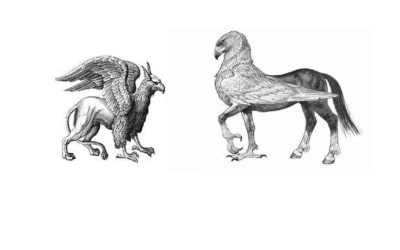
The Gryphon and Hippogryph, are two mythical animal-bird hybrid creatures, that in the history and culture of Venice have assumed great symbolic meaning to the State, Church and Alchemic Science.

The Arsenale di Venezia, was the heart of the Venetian naval industry from the 13th century, generating much of the city’s economic wealth and power; that lasted until the fall of the Serenissima to Napoleon’s conquest of the area in 1797.

They were the two rival factions, into which the working class of Venice was divided. Like modern gangs, they could be identified by their “colours”: the Nicolotti wore black caps and scarves; whilst the Castellani wore red.

It is unique, despite modern worldwide cultural influences, as it remains original and is used by all classes of society.

A reality of life in Renaissance Italy, Venice was known throughout Europe and Russia, for its beautiful and exotic prostitutes.

Updated for 2026, this post covers one of the most famous carnivals in the world. Beautiful costumes and typical Venetian masks, transform the city in a magical way.